Changing Faces, Changing Lives

Sylvie’s Story

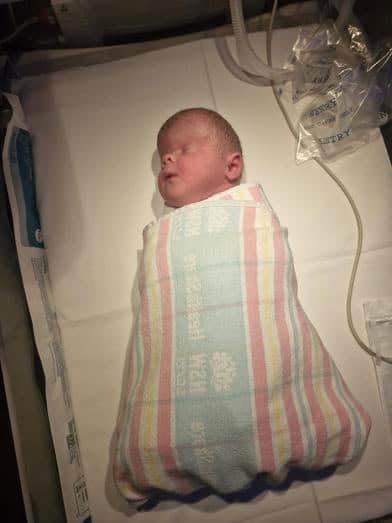
Newborn baby wrapped in hospital blanket in neonatal intensive care unit.

When we found out we were expecting our daughter, Sylvie, we knew there was a 50% chance she could inherit Muenke syndrome.

Her dad has Muenke syndrome and was also born with craniosynostosis. Because Muenke syndrome is inherited in an autosomal dominant pattern, each pregnancy has a 50% chance of inheriting the condition. While we hoped our daughter wouldn’t have to face the same challenges, we knew it was a possibility.

At our 20-week morphology scan, our concerns became more real. The sonographer noticed frontal bossing and that Sylvie’s skull appeared clover-shaped. From that moment, our pregnancy became filled with uncertainty and questions.

While I was still pregnant, we were referred to the Westmead Children’s Hospital Craniofacial Team and had our first appointment via telehealth. Although we didn’t yet have a confirmed diagnosis, we knew Sylvie would need specialist care from the moment she was born.

When Sylvie was born in June, cord blood was collected for genetic testing. At just one month old, she underwent her first CT scan before we travelled to Westmead for our first Craniofacial Clinic appointment.

It was there that we were told Sylvie had bilateral coronal craniosynostosis. The team explained that the coronal sutures in her skull had fused too early and that surgery would be needed to create room for her growing brain.

Shortly afterwards, the genetic testing confirmed what we had been expecting, Sylvie had inherited Muenke syndrome, caused by a change in the FGFR3 gene.

At just three months old, Sylvie underwent her first cranial surgery, a bilateral strip craniectomy.

Watching your baby disappear through the operating theatre doors is something no parent can ever be prepared for.

During surgery, Sylvie experienced an air embolism, a rare but serious complication. Thankfully, her surgical team recognised it immediately and acted quickly, and she recovered well.

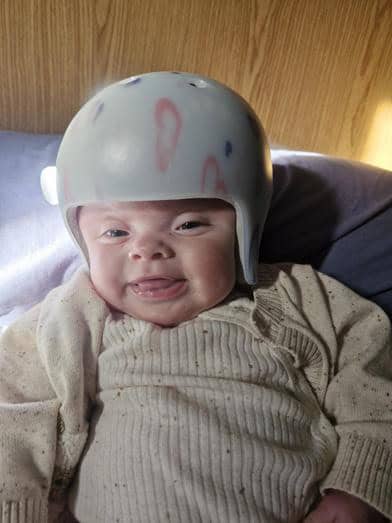
After surgery, Sylvie began helmet therapy, and we truly believed everything was heading in the right direction.

It was also after we returned home that another part of our journey began.

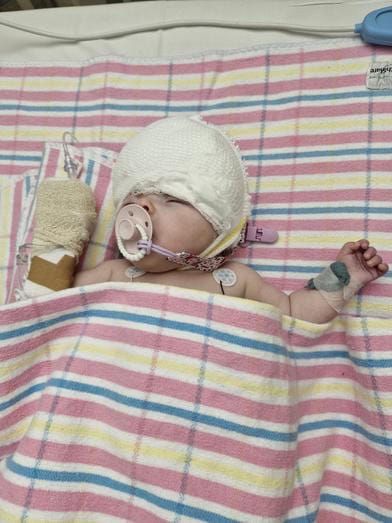
Infant with craniofacial condition in hospital bed with medical devices.
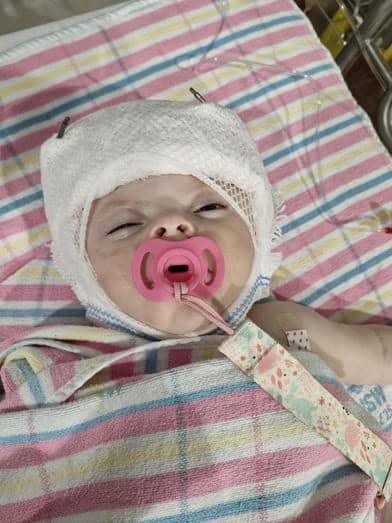
Young child with craniofacial condition in hospital bed with medical headgear and pink pacifier.

At three months old, Sylvie was diagnosed with moderate-severe to severe mixed hearing loss in both ears and was fitted with hearing aids. Around the same time, she began early intervention to support her development.

Life quickly settled into a routine of helmet adjustments, hearing appointments, therapy sessions and regular trips to Sydney. We were hopeful that the first surgery had worked and that we were moving forward.

Then, at our February Craniofacial Clinic, everything changed.

We were told that despite the surgery and months of helmet therapy, Sylvie’s skull had not grown as everyone had hoped. She would need another major operation.

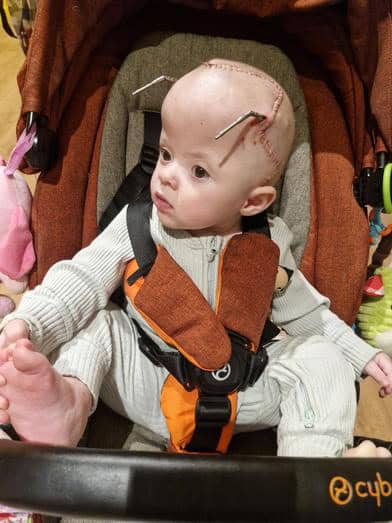
On 15 May, Sylvie underwent posterior vault distraction, a surgery designed to gradually move the back of the skull over several weeks to create more space for her growing brain.

Unfortunately, our journey became much more complicated than we ever imagined.

Just eleven days later, on 26 May, one of the distractors failed and Sylvie needed emergency surgery to replace it.

Then, on 5 June, the replacement distractor failed as well.

After carefully weighing the risks of another operation so soon after her previous surgeries, her surgeons decided that putting Sylvie through another emergency procedure carried greater risks than accepting a smaller amount of distraction. Instead of achieving the planned 30 mm, Sylvie reached 23.5 mm. Although it wasn’t the original goal, her surgeons were happy with the outcome and, most importantly, Sylvie recovered beautifully.

She will still undergo another surgery to remove the distractors in September.

Baby wearing a helmet with pink and blue markings, lying on a bed.
Young child with cranial surgery scars in a stroller, looking to the side.

Over the past year, we’ve learnt that Muenke syndrome is about so much more than the early fusion of skull bones.

For our family, it has meant multiple cranial surgeries, hearing loss requiring hearing aids, developmental delays, early intervention therapies, countless scans, hospital stays, and the support of an incredible multidisciplinary team including craniofacial surgery, neurosurgery, audiology, ENT, genetics and allied health professionals.

One of the biggest lessons we’ve learnt is that no two people with Muenke syndrome are the same. The condition has an incredibly wide spectrum, and every child’s journey is unique.

There have been days filled with fear, uncertainty and exhaustion. There have also been moments of incredible kindness from the medical teams who have cared for Sylvie and from other families who truly understood what we were going through.

If there’s one thing we’d like another family to know after receiving a diagnosis of Muenke syndrome, it’s this:

You don’t have to have all the answers today.

The appointments, scans, surgeries and medical words can feel overwhelming at first. Take one appointment at a time, one surgery at a time and one day at a time. Ask questions, lean on your medical team and don’t be afraid to reach out to other families who have walked this path before you.

Most importantly, remember that your child is so much more than their diagnosis.

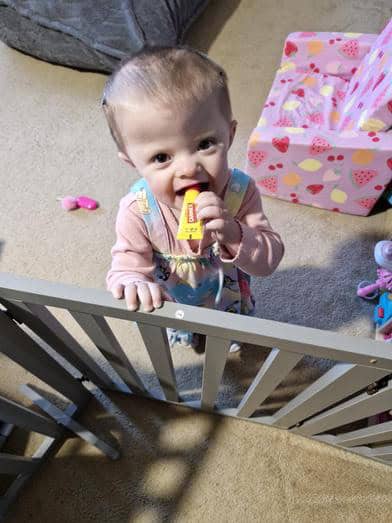
Today, Sylvie is a happy, determined little girl who loves to run, climb and be wonderfully cheeky. She keeps us on our toes every day and reminds us constantly that children are far more than the challenges they face.

Muenke syndrome will always be part of Sylvie’s story, but it will never be the whole story.

If sharing our journey helps even one family feel a little less alone after hearing the words “Your child has Muenke syndrome,” then it is a story worth telling.

Young child with a pacifier in a playpen, surrounded by toys and gifts.

Share

Sylvie’s Story

Facebook
Email

Every story matters - including yours

Every craniofacial journey is unique – filled with challenges, triumphs and everything in between. Every face has a story to tell. By volunteering to tell yours, you’ll not only honour your own experience, but also give hope and encouragement to others walking a similar path. Whether you’re a parent, sibling or supporter, we’d like to hear from you. As a story volunteer, we will  make sure that your story is told in a way that suits you.

Scroll to Top