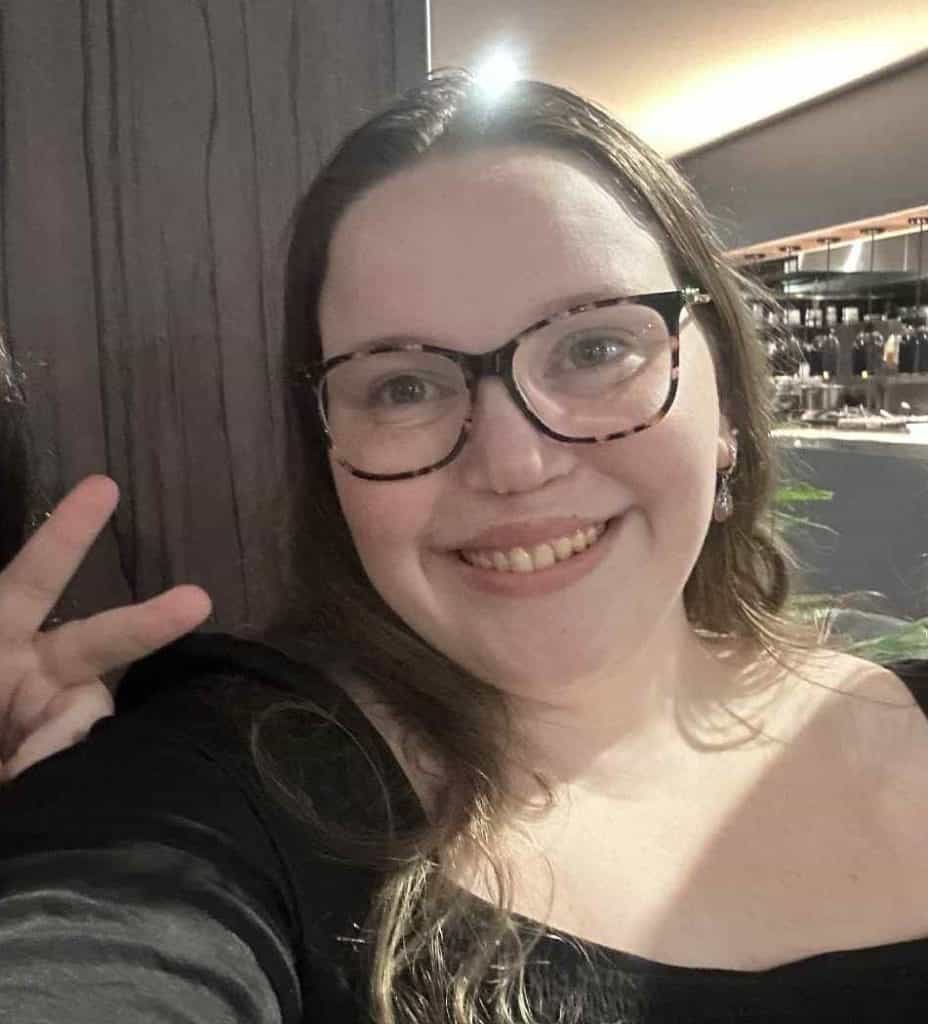
After her routine 20 week ultrasound scan, mum Angel was called in to her GP’s office.
“The baby we’d been trying for, for almost three years would be born with a significant (1cm+) cleft lip and palate. We didn’t know what to expect, but our GP told us how common it is (one in approximately 800 babies born in Australia), and that there is a special team at the children’s hospital dedicated to children born with clefts, so not to worry”.
Angel reflects that as parents, you do worry. They went to see one of the surgeons privately for peace of mind. The surgeon explained just how well their daughter would be looked after when she was born and what to expect following their baby’s birth.
“I cannot fully express how devastating it felt to think that hospitals and surgeries would be her “norm” throughout childhood. We were also concerned that there might be additional issues not picked up by the scan, so I underwent amniocentesis to rule out any further complications as much as possible. It was a scary time for us. Our family, friends and colleagues rallied around to help us get through it”.
Baby Ripley was born – utterly perfect and amazing, cleft and all. She spent the first 24 hours in the hospital nursery under observation to ensure she could feed properly. Ripley’s parents were taught to bottle feed her with a squeezy bottle. As cleft babies can not be breastfed, Angel began the long journey of expressing.
Upon further testing it was found that Ripley also had atresia (total deafness) in her right ear, the same side as the cleft.
“Despite this, we felt really supported by the health system and grateful to be in Australia with access to Medicare. We didn’t have to worry about costs and could solely focus on our daughter’s wellbeing. The cleft dental team put together a plate for her to wear, which would encourage her maxilla (gum) to grow optimally for the future planned surgeries, and we were given a cute little “bonnet and strap” for her to wear to encourage her lip to grow in the same way. It took some getting used to, for her and for us, but we took it in our stride”.
At six months old, Ripley had her first surgery – lip repair. She was in hospital for several nights and afterwards, wore arm braces for two weeks to stop her from touching her mouth. Despite these challenges, it was heart-warming to see Ripley discover her top lip for the first time, licking it and making new sounds.
At nine months, she had her second surgery – palate repair and another few nights in hospital. As the cleft was significant, this was a more complicated surgery but it went well and she recovered quickly.
Ripley has ongoing speech pathology to help her to form the sounds that don’t come easily when you haven’t had a top lip or palate for the first year of your life.
“She works really hard on her pronunciation, and we are lucky to have help from a team of experts who understand her specific needs as a “cleftie”. We are so proud of how far she has come, and we know that no matter how tough the road ahead, she’ll meet it head-on, as she has done her whole life. She’s the most incredible little girl, with a little warrior scar under her nose making her extra special,” Angel explains.
After her routine 20 week ultrasound scan, mum Angel was called in to her GP’s office. “The baby we’d been trying for, for almost three years would be born with a significant (1cm+) cleft lip and palate."
My daughter Briana was only 2 days old when she first met Professor David. I was in absolute shock when he walked in, knowing how busy he was. How amazing is it that this man cares so much about this little child that has just been born? When he held her on that first meeting, he said ‘You are the most beautiful little girl and we will do everything for you’.
Cecilia was born with a unilateral cleft lip and palate. She was inspired by the care given to her by medical staff during her treatment and is now a nurse herself. “Everyone is different and it can be hard, but when you grow up it’s not going to matter at all”.
Meet Flora – a bright and resilient little girl born with a bilateral cleft lip and palate. Her family received her diagnosis during a routine pregnancy scan, and from that moment, they began a journey filled with challenges, strength, and hope.
Meet Hunter - Born in May 2022, Hunter was diagnosed with cleft lip and palate and metopic craniosynostosis at birth. He had his lip repaired at 6 months and his palate repaired at 11 months old.
It wasn’t until Kate was 19 years old that her father told her that he fainted at the sight of her as a baby. It is a significant moment, because it indicates just how far Kate has come. Her story is one of anguish and triumph – a craniofacial journey that will last her whole lifetime.
I was 6 years old when I first came to Australia from Pakistan where I was born. However, I was born with a birth defect called 'Cleft Lip Palate', 1 year later my father came to Australia by boat. He was a refugee and was finding it really hard to find a proper job (as he was uneducated) and to also support us back in Pakistan.
Meet Vallerie - Born with a bilateral cleft lip, she received her diagnosis during pregnancy and began treatment at just 14 weeks old. Over the years, Vallerie has undergone 7 surgeries, including a hip-to-face bone graft, Lefort 1 Maxilla Advancement, and septorhinoplasty - as well as over a decade of orthodontic care.