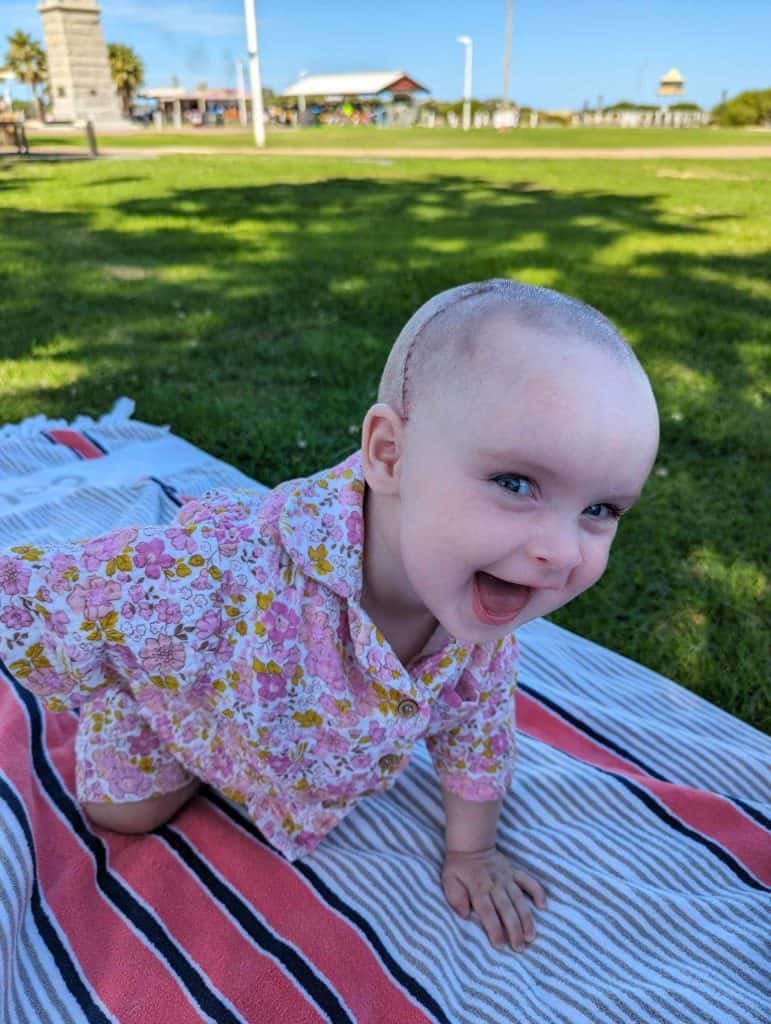
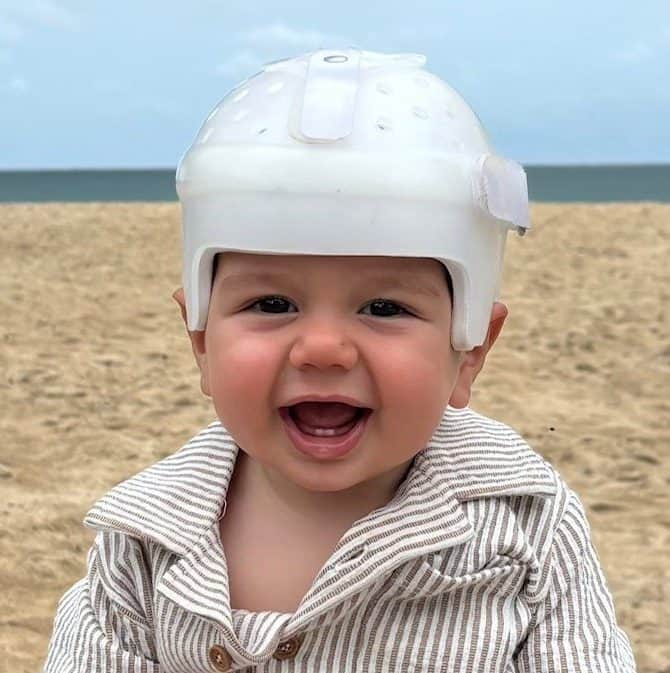
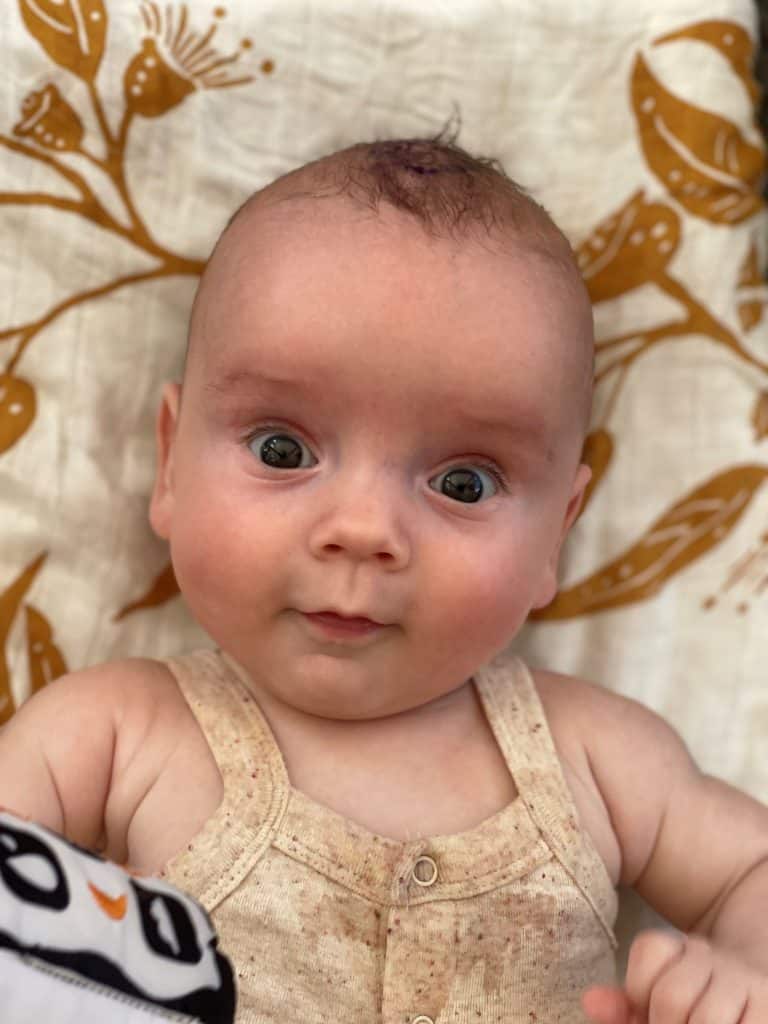
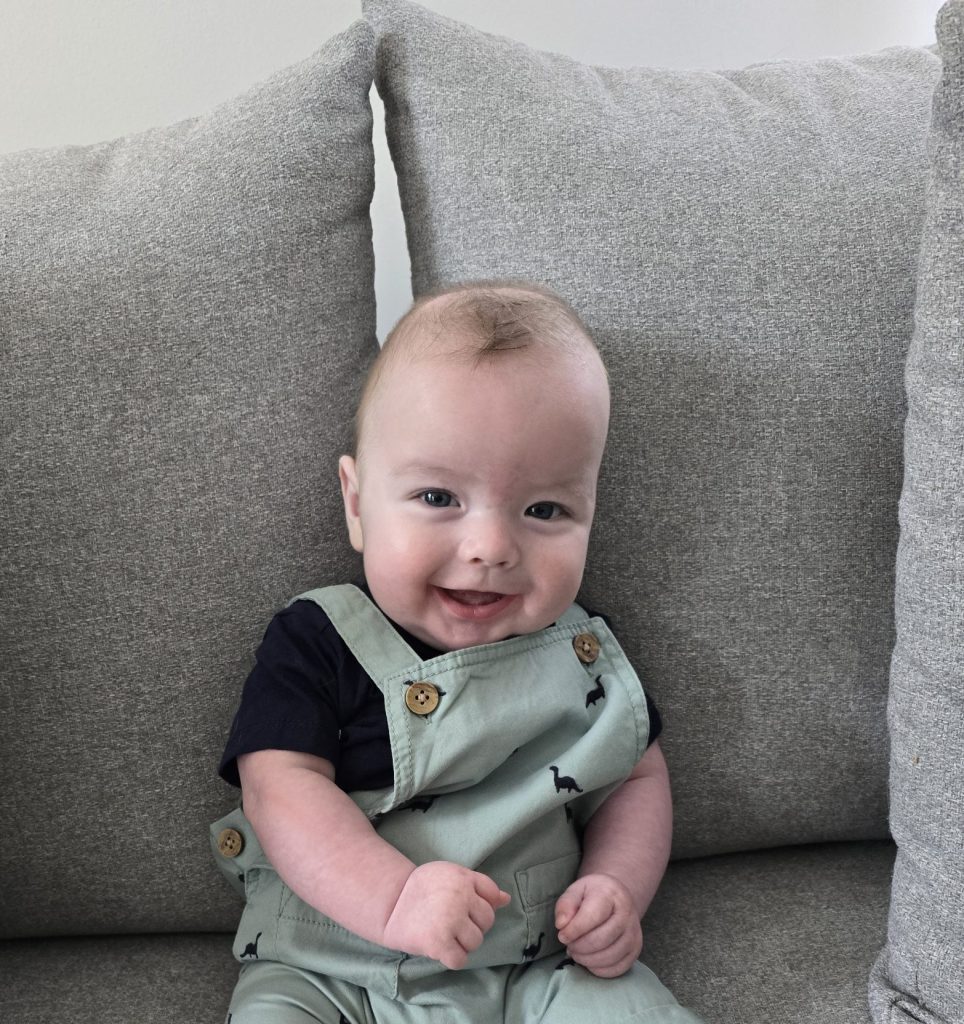
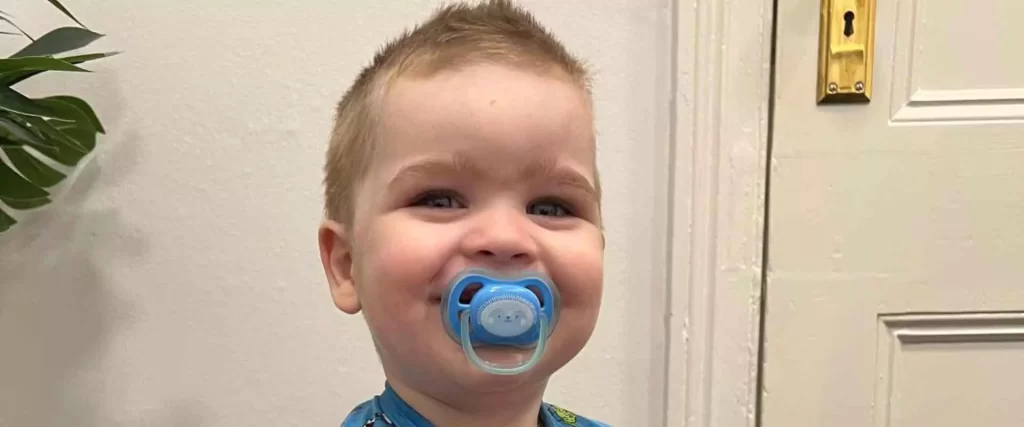
Hamish’s cranio story started the day he was born. No official diagnosis, just a comment from the Paediatrician about his odd head shape. At 3 weeks of age when leaving the hospital, they mentioned the possibility that he may have Craniosynostosis but that she would confirm at his 6 weeks check.
Hamish was 2 months old when he had his first CT scan and got the official diagnosis – Sagittal Craniosynostosis.
I immediately started researching everything I could. What would this mean for him? How would this impact his future? What was the best treatment option for Hamish? And what was the cause of this rare condition?
After doing a lot of research, we decided that we would go to Adelaide for his surgery. When Hamish (and his twin brother) were 4 months old, we all flew to Adelaide to meet the Surgeon for the first time.
After meeting Hamish’s Doctor, we discussed and accepted that the best option for Hamish was a full Cranial Vault Remodel (CVR). Hamish’s Sagittal suture was shown to be fused on the CT scan. His head was so big and heavy for him it was starting to impact his development. One example being he couldn’t lift his head during tummy time.
When Hamish’s surgery date was set for the 9th of October 2018, we prepared to move our family interstate for 3 weeks. Hamish’s grandparents also made the trip to provide support. The weeks leading up to surgery were extremely stressful, emotional and overwhelming. Aside from juggling the needs of twin babies, Hamish was also diagnosed with hip dysplasia which we needed to have treated prior to his CVR.
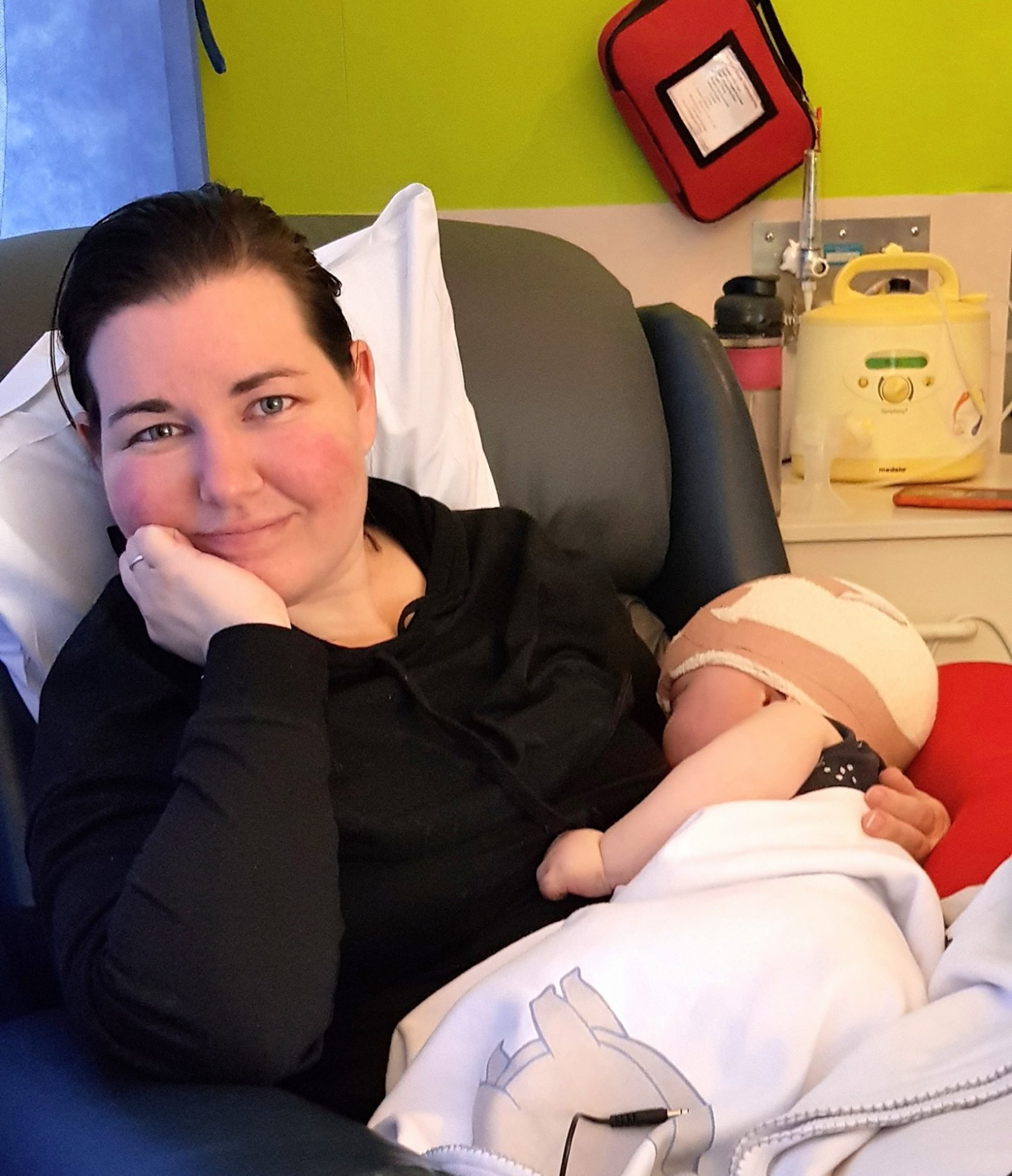
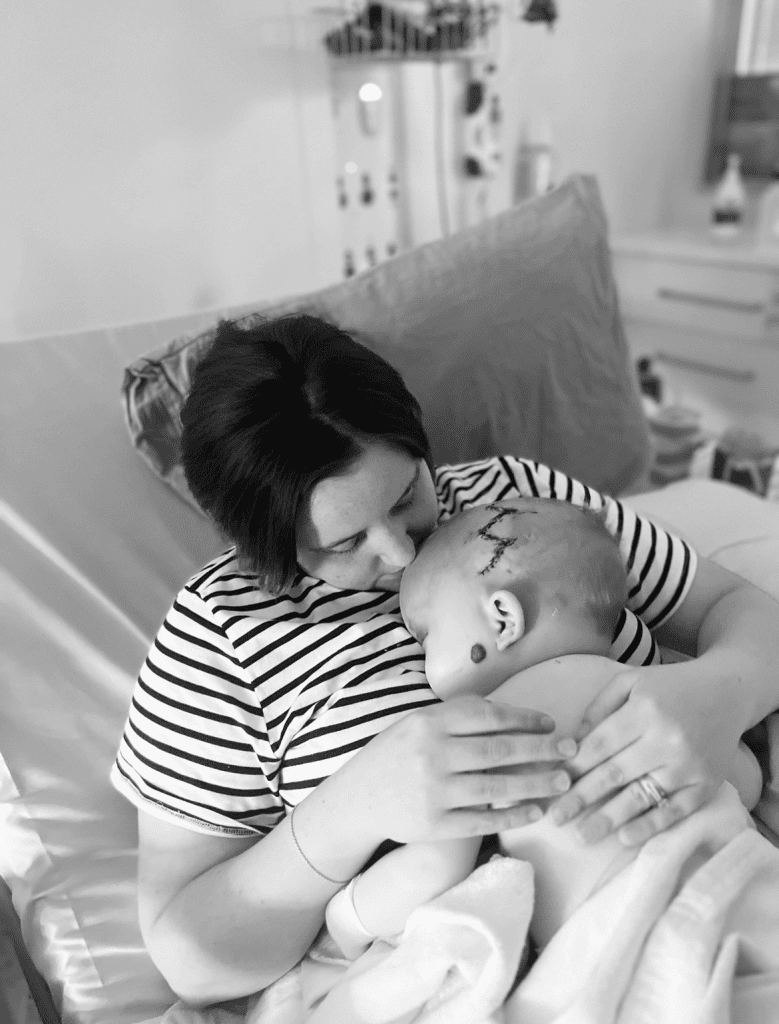
Whilst our anxiety levels were steadily on the rise throughout the week of the preoperative appointments, the day of surgery was the hardest part of the process by far. We first were dropped off to the hospital early to allow for Hamish to go through the necessary preoperative checks. The nurses we met during this period were comforting, friendly and supportive. The hardest two parts for us were having to hand Hamish to the doctors in theatre and then the 6 hour long wait. This 6 hours was the longest of our lives. It was an enormous relief to be back with Hamish in the Paediatric Intensive Care Unit (PICU) after the successful operation.
Hamish would go on to remain in hospital for a total of 5 days and then another 10 days as an outpatient.
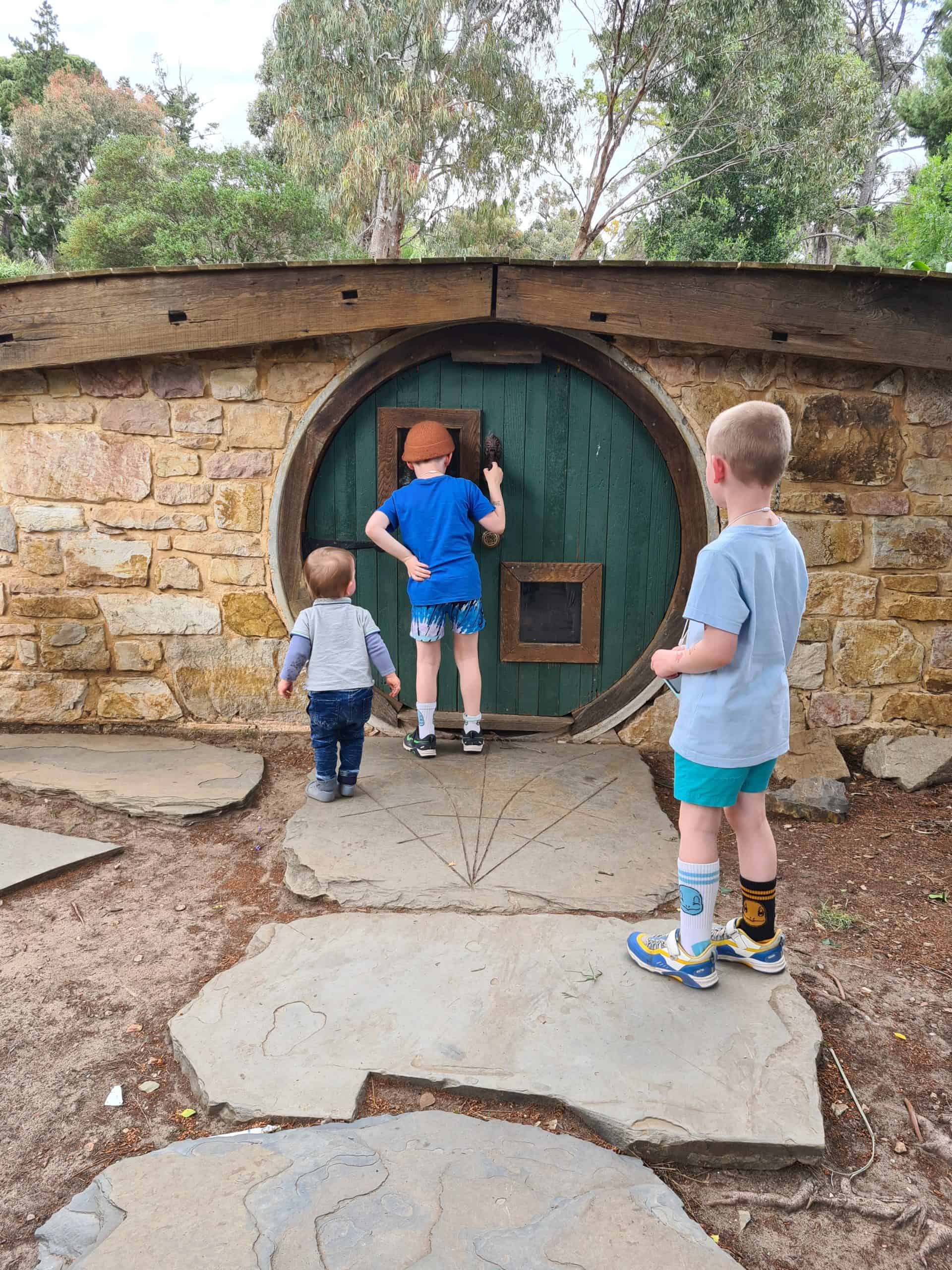
Having spent the past 7 months avoiding crowds and illness, we celebrated our new sense of freedom by visiting Adelaide Zoo, taking many walks in the neighbourhood and having treats at the botanical gardens.
It wasn’t until after Hamish’s surgery that we first became aware of the wonderful team at Craniofacial Australia and were immediately welcomed in as if members of a new family. Hamish was gifted with a beautiful care package and upon hearing that Hamish’s twin would also require an unrelated surgery, the Foundation gifted him with a care package as well.
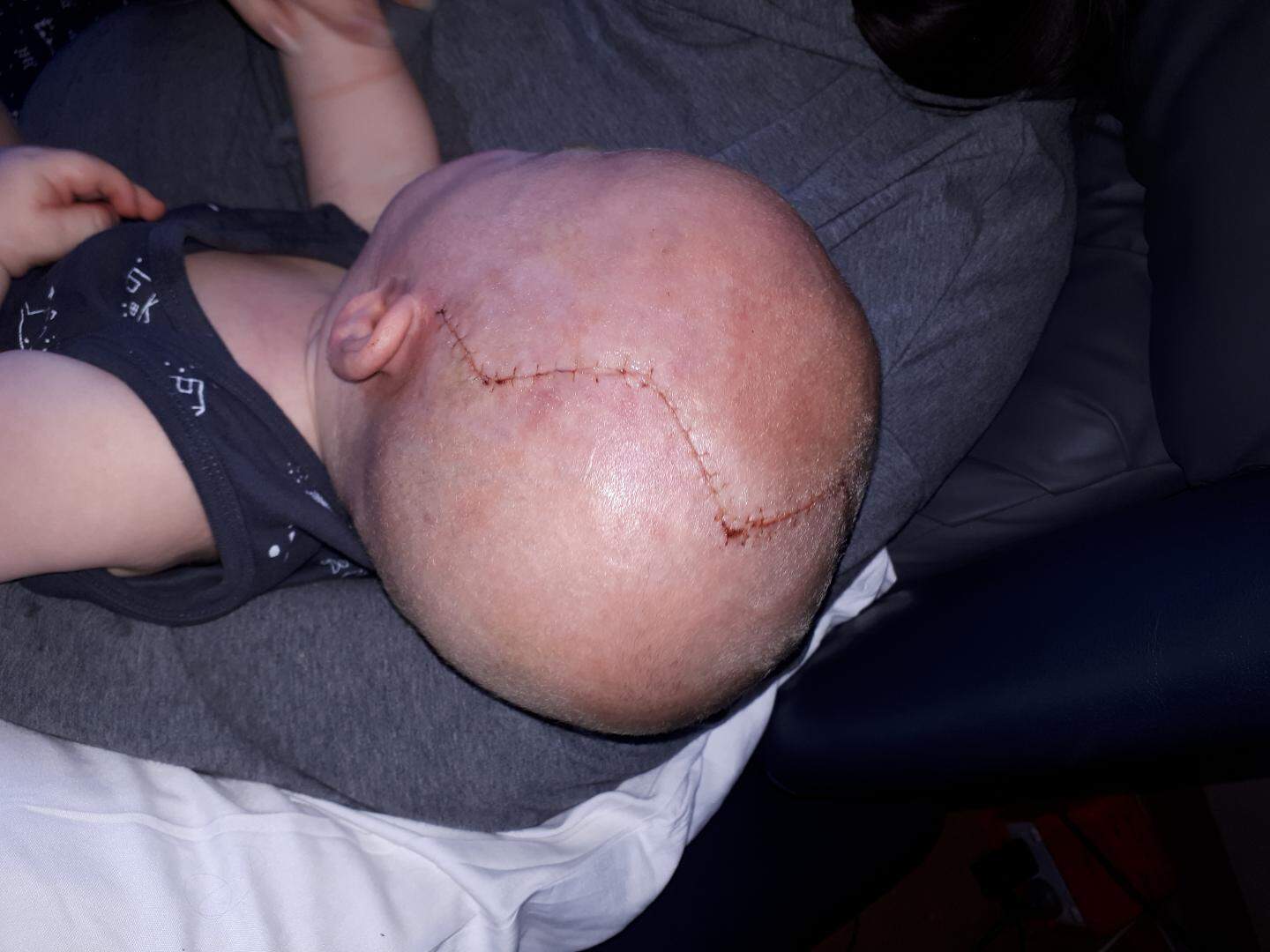
After returning to Canberra, it took a while for our family to adjust our lifestyle to ensure that Hamish stayed safe with part of his skull missing. As time passed, we didn’t think much about Hamish’s head and gradually let him enjoy all the activities that his friends took part in. We kept up with routine follow-up appointments in both Sydney and Adelaide and always made sure to incorporate a fun tourist activity. It was important for us to make Hamish feel like our trips were not solely medically related.
It was around the 2-year anniversary of Hamish’s surgery when we started to become concerned that Hamish’s skull bone had stopped growing. By 2021 a CT scan confirmed that Hamish’s bone growth had slowed significantly for reasons that no one could explain. With the hole in Hamish’s skull remaining stubbornly open and the doctors maintaining that there was still time for the cavity to close, we resigned to waiting and seeing what would happen.
A further two CT scans, one in 2023 and one in 2024, provided further evidence of very minimal bone growth. By this time Hamish had developed into a highly active child who enjoyed taking risks and aspired to play a variety of sports. It was therefore decided by his surgical team, that Hamish would benefit from an additional surgery in the form of a synthetic cranioplasty to cover his large (44mm x 96mm) bone deficit. A rib graft was initially recommended until the threat of them dissolving was deemed too high. Instead, the plan was for a custom 3D printed titanium plate be inserted into Hamish’s skull like a jigsaw puzzle piece.
Almost 6 years after Hamish’s first surgery, he was again scheduled for cranial surgery, this time on the 24th of September 2024. The lead up to this second surgery was so much more difficult for everyone for a multitude of reasons. Firstly, Hamish had developed substantial trauma from his first operation and was now terrified of all kinds of hospital visits. Secondly, Hamish had grown self-conscious of having his hair shaved, having a visible scar and generally being different from his friends.
In an effort to normalise this for Hamish, we organised a “shave party” with his friends and family where everyone shaved their hair off. Hamish took part by shaving his Dad’s head with Hamish’s Mum getting a hair tattoo that resembled a zig-zag scar. We also approached Hamish’s school about having class discussions around individual differences and being inclusive of those with different appearances and experiences. We were also able to organise a school wide fund raiser (superheroes vs villains day) with the proceeds going to Craniofacial Australia.
And for ourselves as Hamish’s parents, we sought support from Claire the Family Support Coordinator at Craniofacial Australia as well as other Cranio Families.
So, we all packed up again and prepared for our next 3 week long stay in Adelaide. We spent the first week distracting ourselves by visiting a different beach every day around preoperative appointments. The second week included the surgery and the amazing team at Craniofacial Australia eased Hamish’s worries with a wonderful care package that gave him everything that he would need for his hospital stay.
Hamish’s second surgery was as smooth as one could hope for as everything went perfectly to plan without any complications and took far less time than anticipated. Hamish was able to go straight to the ward, avoiding any time in PICU, and was even discharged early due to his speedy recovery.
As an outpatient, we again spent the following 10 days in Adelaide doing as many enjoyable activities as possible. After 6 years, it finally felt like we could relax, stop worrying about getting ill and let Hamish dive “headfirst” into a “normal” childhood.
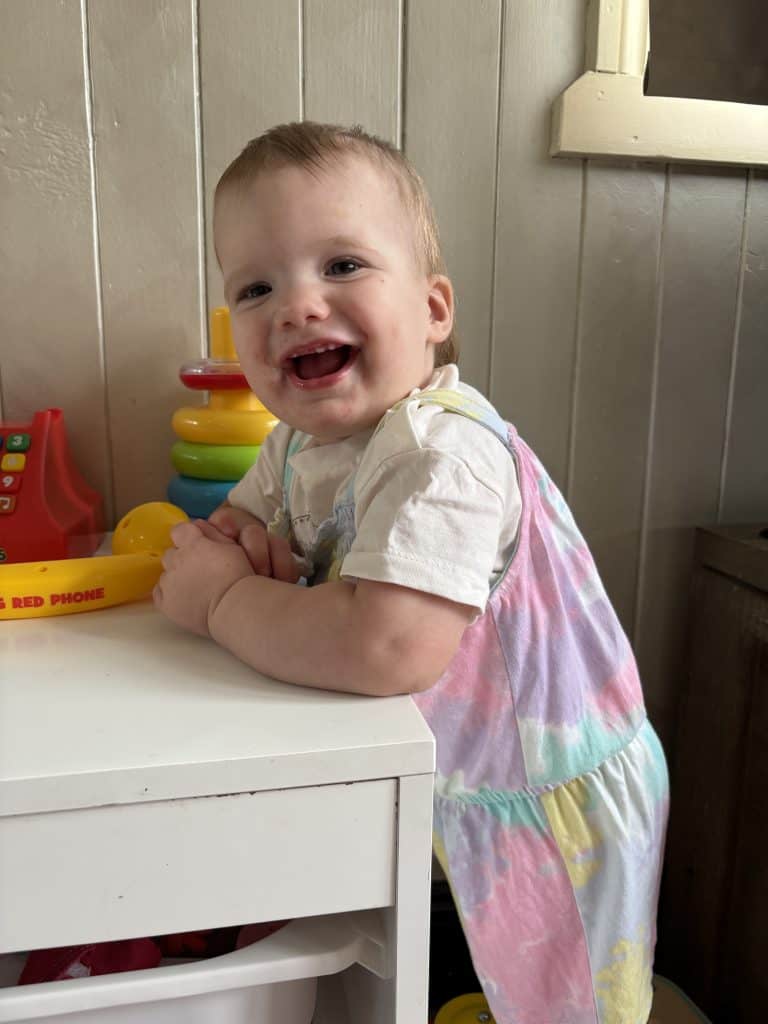
Hamish is currently loving participating in a variety of sports, playing with his friends and generally running amok. His high energy levels mean that he will never slow down (in fact he broke his wrist within months after his surgery) and leaves us with no doubt that we made the correct decision for Hamish by putting him through another surgery.
From the very beginning, Abigail’s journey has been one of strength, courage and love. What started as a parent’s instinct soon became a life-changing diagnosis, and a path that would require resilience well beyond her tiny years.
Archie was born via C-section. The midwife commented on Archie’s large head size and Mum Georgia recalls that this was the first comment in regards to her sons head. The family was over the moon with healthy baby Archie and loved seeing the instant connection between him and his older brother, who was 3 at the time.
Ava, now 2, was diagnosed at birth with Sagittal Craniosynostosis after nurses noted unusual ridging along her head. She was seen to promptly by the craniofacial unit.
Weeks after second son Benji was born, Natalie’s world went into a spin. After being admitted to hospital for an unrelated virus, a paediatric doctor observed Benji’s head shape and referred him to a specialist team at the hospital.
Cathy was born in 2020 in Adelaide, South Australia. At birth, it was noted that she had prominent ridging of the sagittal suture, along with dysmorphic features. She was immediately referred to the Craniofacial Unit, and had genetic testing recommended.
When Cruz was born, mother’s instinct told Bec something wasn’t right. She shares with us her incredible story to find the right answers for her son and receive the treatment he needed for previously undiagnosed craniosynostosis.
Darcy was diagnosed with Sagittal Craniosynostosis at four months old. This was a scary and unknown time for our family, however our Paediatrician and the whole Cranio team were incredible. They went above and beyond to make us feel at ease and provide enough information on the matter / process going forward, this was especially important to us as we had never heard of the condition.
Melbourne-based Ella was recently treated for Sagittal Craniosynostosis. Born prematurely at 26 weeks, she spent 4 months in hospital. At 3 months, Ella’s paediatrician referred her to the hospital’s Craniofacial team.
Diagnosed with Sagittal Craniosynostosis at just 1 year old, Freddi underwent a cranial vault remodelling at 18 months, supported by an incredible team of haematologists to prepare her for surgery, all without needing a blood transfusion.
Gabriel was born via elective c-section on the 3rd of April 2024, at 39 weeks and 3 days. From 20 weeks gestation we were told he was measuring in the 98th percentile for all measurements (which wasn’t a surprise as his brother was the same), he was head down from around the same time and was very hard to get a clear picture of his head on ultrasounds.
It was a long road for Gordon to finally get here. After many losses we were lucky enough to welcome baby Gordon, little brother to Bernie. A couple of routine ultrasounds raised a red flag around his head and ventricle size, but they were ultimately dismissed as a non-issue.
After an emergency c-section, Mum Jessica gave birth to baby Harper, who had jaundice, causing her stay in hospital to be prolonged. At Harper’s hospital discharge, the doctors did a thorough examination and noticed her fontanelle was very small and hard to find. Harper was immediately referred for an MRI.
Harry was diagnosed with Isolated Sagittal Craniosynostosis at 8 weeks old. We were concerned about his head shape from birth but were initially cleared by all medical practitioners involved in his paediatric care. At our 8-week-old check up with the paediatrician, I expressed my concerns and after examination, we were sent for an X-ray.
"Team Huxley" was created by baby Huxley's Uncle Baxter while juggling Year 12. Baxter rounded up twenty of his family and friends to walk or run the Adelaide City-Bay on Sunday 15th September 2024.
Milan’s craniosynostosis journey was a long road with many medical professionals, opinions and finally answers and relief! It all started in September of 2019 in the delivery room. Within an hour of his birth one of the midwives approached me and suggested I visit an Osteopath, explain the birth to them and have a good feel of his head.
Meet Orlando - Diagnosed with Sagittal Craniosynostosis at just 8 weeks old, he underwent skull surgery at 14 weeks, followed by 8 months of helmet therapy.
Poppy, now 20 months old (December 2024), had a rough entrance into the world via an emergency C-section due to fetal distress. Because of this, there was a pediatrician present in the OR with us, ready to assess her when she arrived.
Reuben was born in 2022 weighing a healthy 3,960g. Reuben was delivered via planned C-section at 37 weeks due to unknown cause of acceleration of growth and maternal history of pre-eclapsia and HELLP (Hemolysis, Elevated Liver Enzymes and Low Platelets) Syndrome.
Teddy was born via a planned C-section. On day three, during a routine checkup, the paediatrician came in to examine him. My husband, Alex, jokingly commented, "Thank goodness he doesn’t have a head like mine," as Alex was born with craniosynostosis.
Zayne came via emergency C-section. He went into fetal distress and we lost his heartbeat. He was rushed in for an X-ray within an hour of being born as they noticed that his head was not the correct shape. He was also resuscitated at birth.