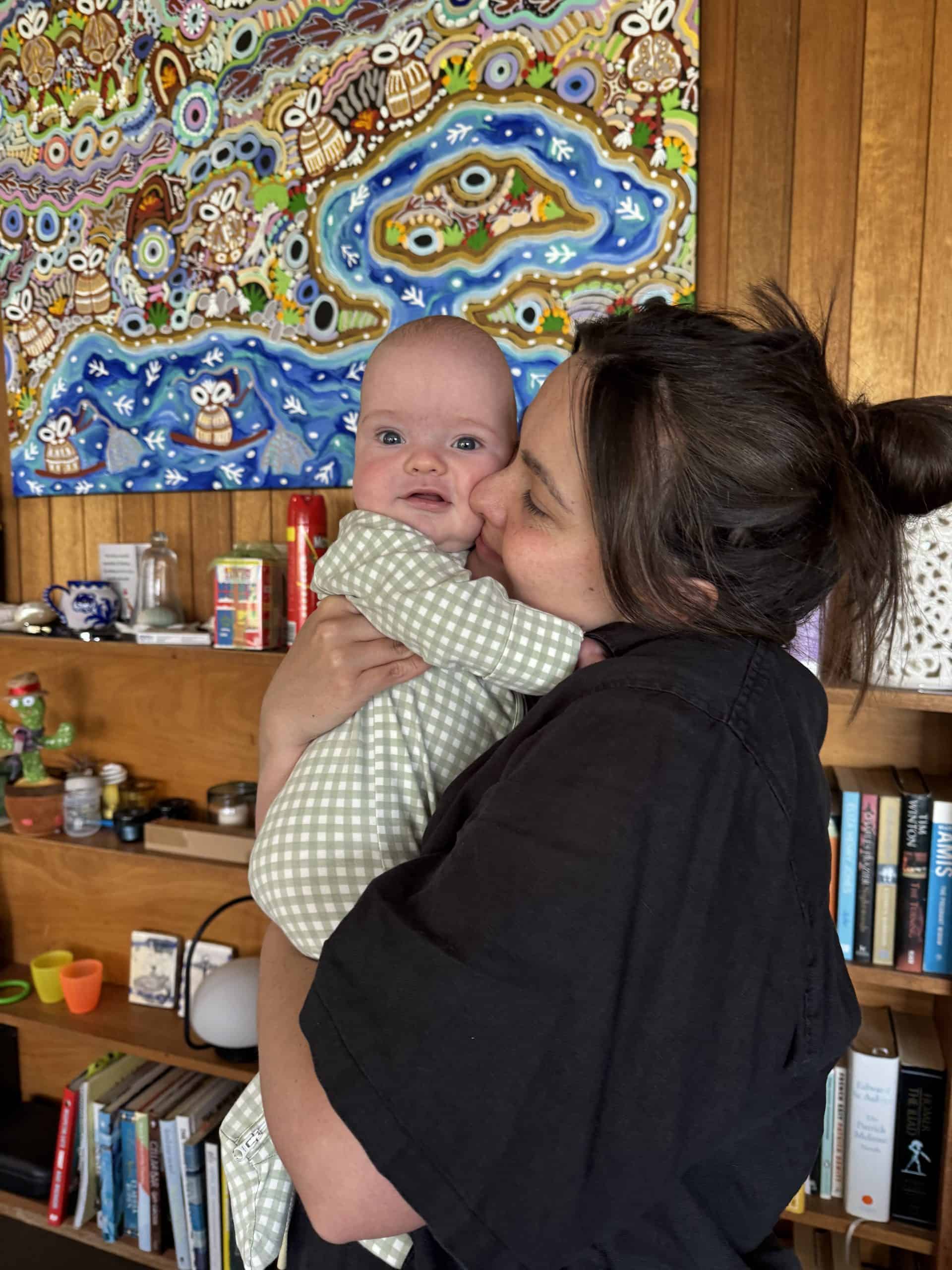
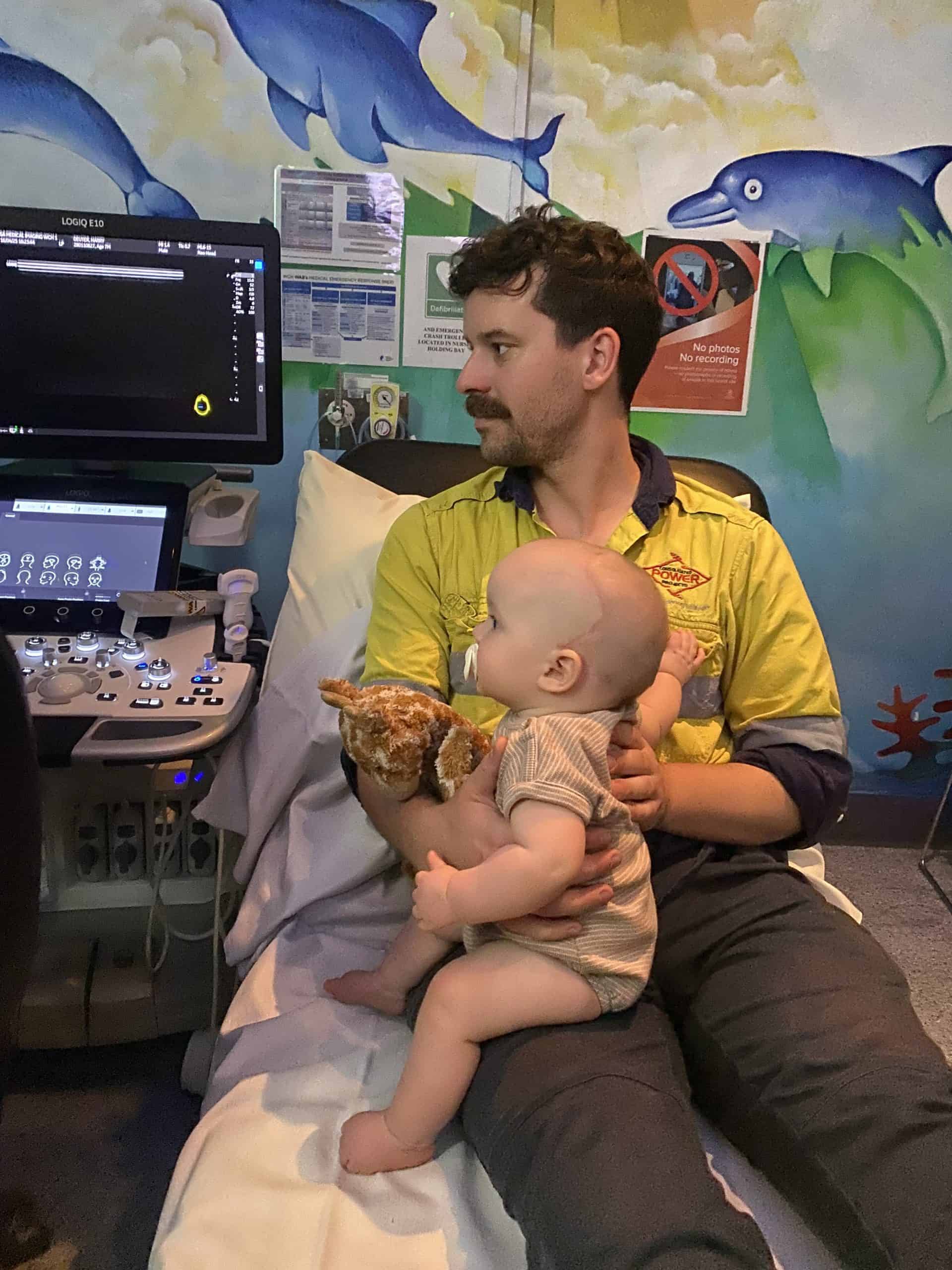
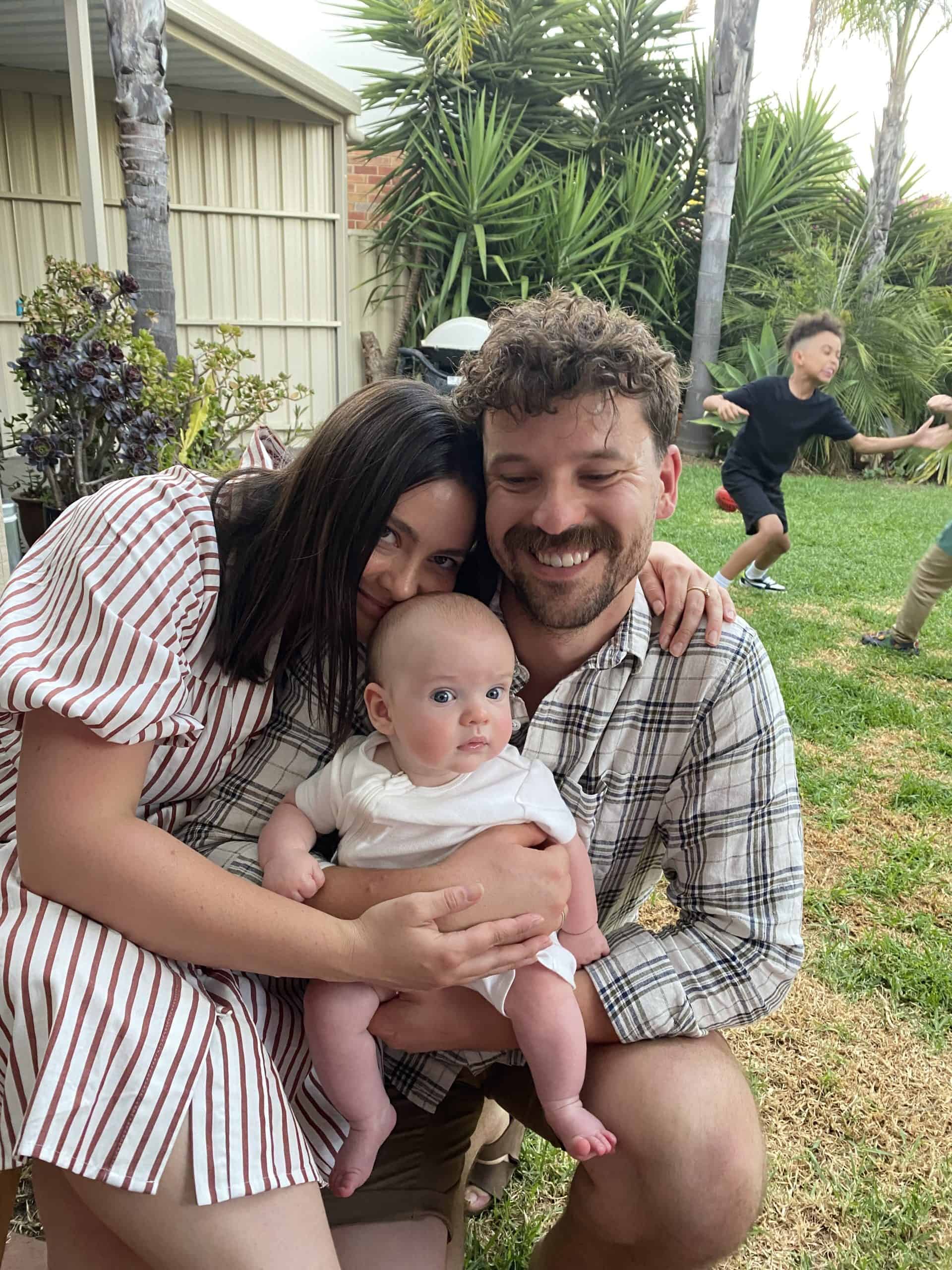
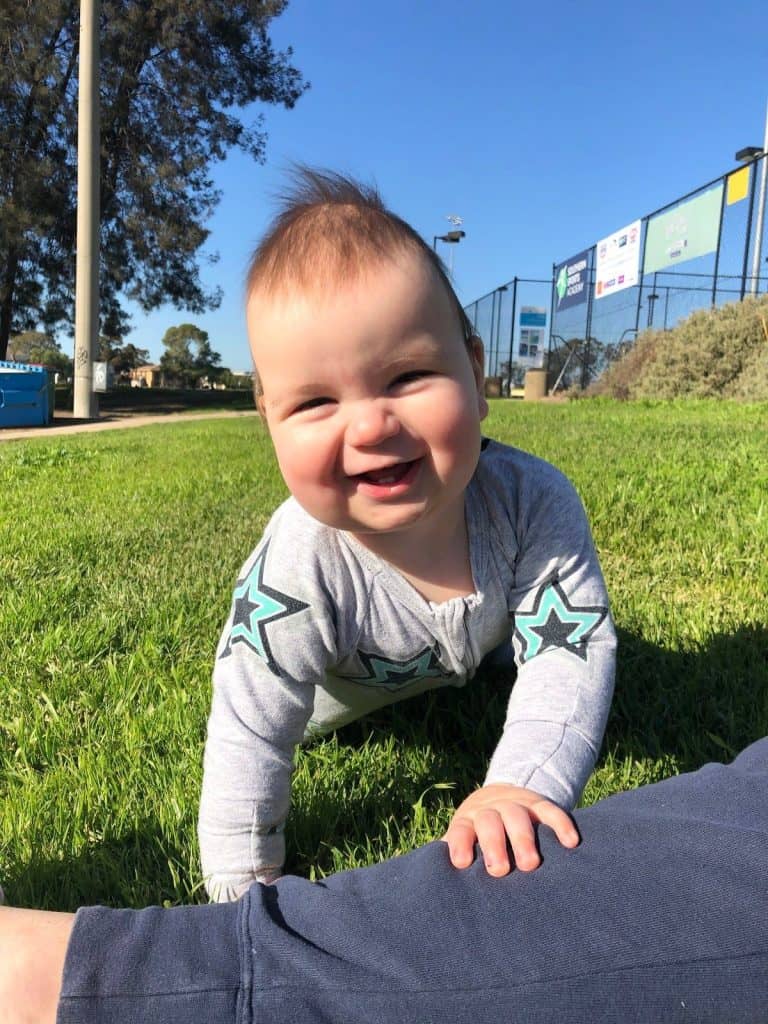
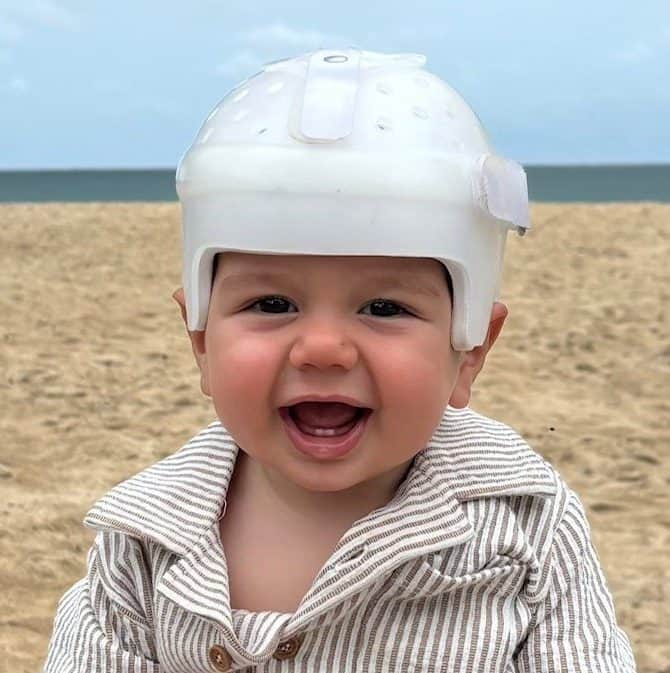
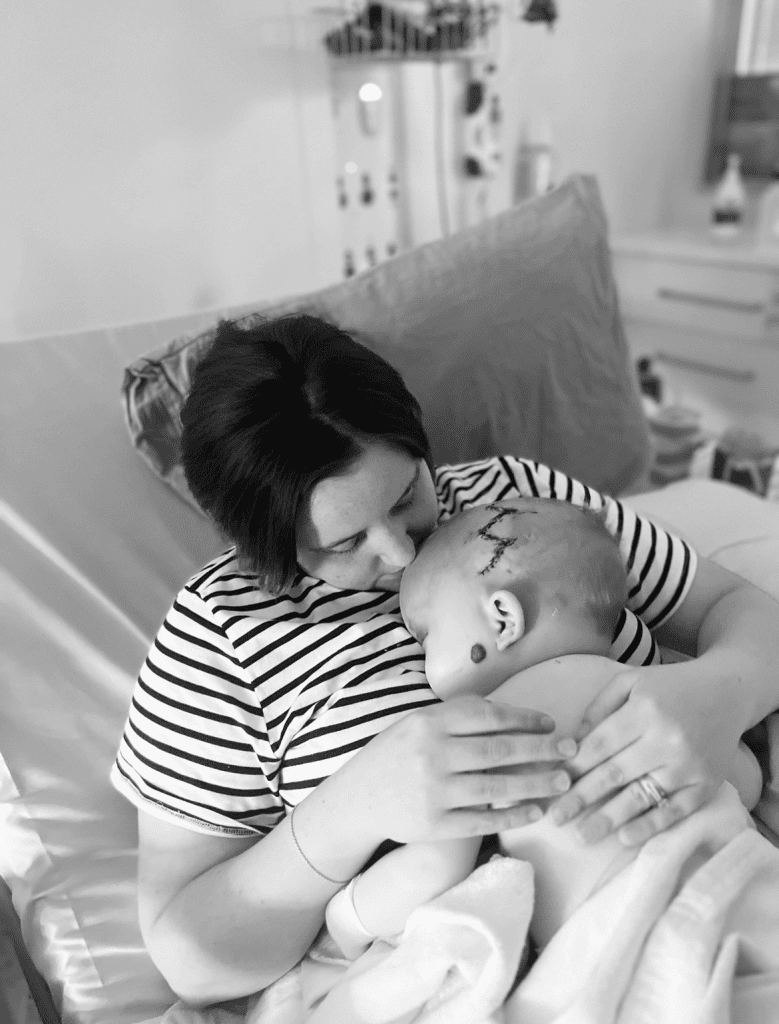
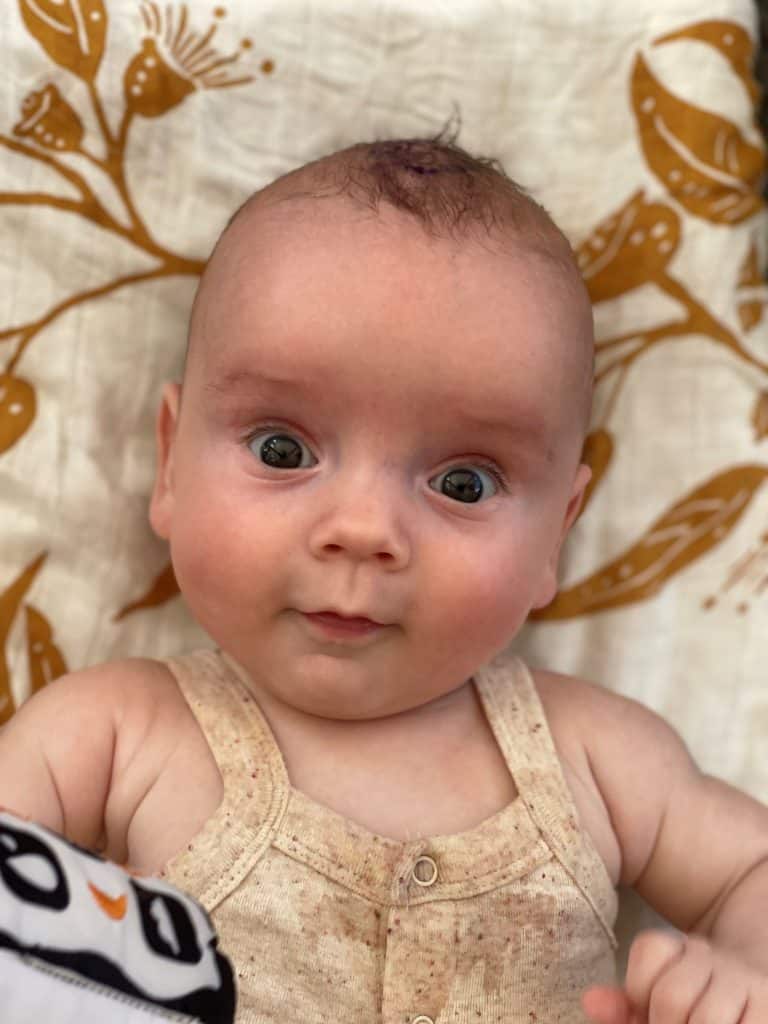
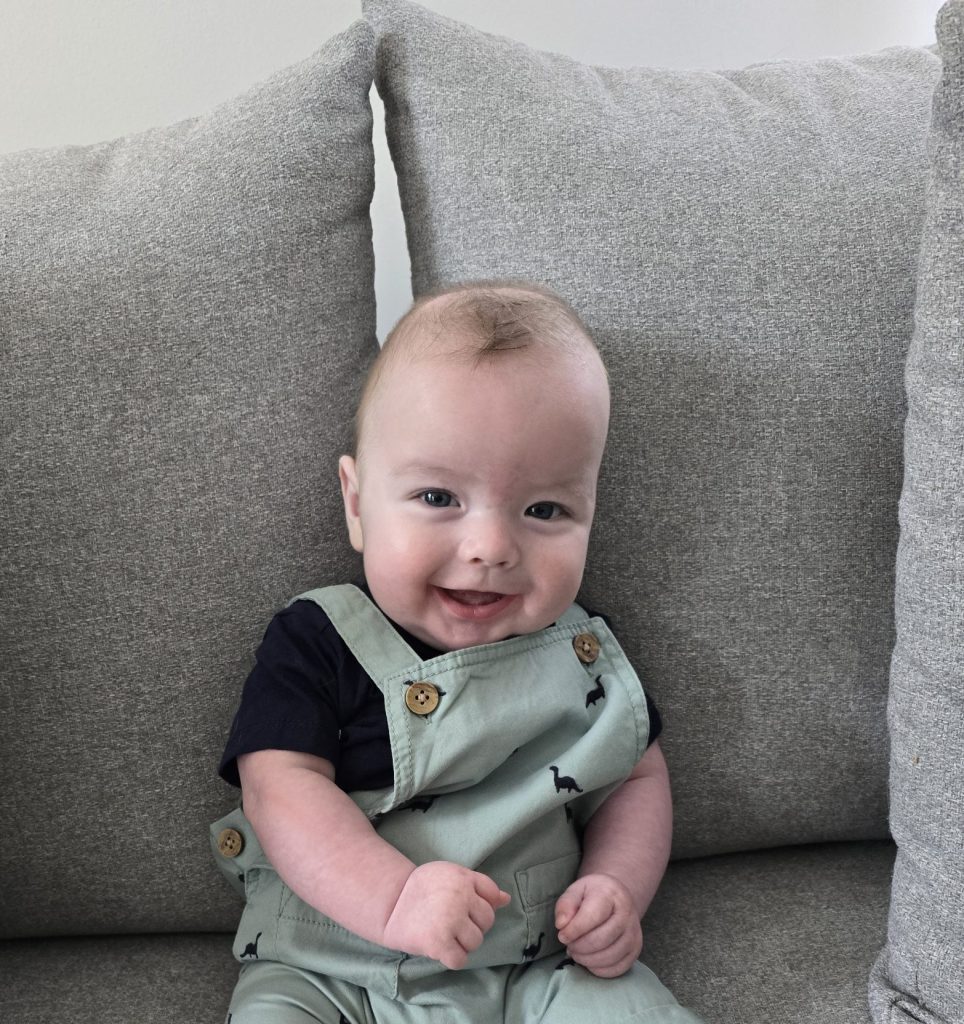
Harry was diagnosed with Isolated Sagittal Craniosynostosis at 8 weeks old.
We were concerned about his head shape from birth but were initially cleared by all medical practitioners involved in his paediatric care. At our 8-week-old check up with the paediatrician, I expressed my concerns and after examination, we were sent for an X-ray.
“Later that day, we received an email confirming the diagnosis. We were devastated and confused with no understanding of what the diagnosis meant for Harry.”
We spent the next week googling, Facebook searching, calling around and trying to gather as much information as possible about this condition, all the while having no idea what this diagnosis really meant for his individual case.
I contacted Craniofacial Australia and spoke with Claire, their Family Support Coordinator. I was scattered and confused with so many questions, which she calmly answered with compassion and guided me through the next possible steps.
Claire referred me to stories on the foundation’s Facebook page and website and shared how the foundation can support families. A care package was sent to Harry from the foundation, which made us feel less alone during this difficult time.
Throughout the experience of Harry being diagnosed, I felt I had to advocate and do my own research to understand how best to support him in the lead-up to his surgery. I had to find my own credible and relevant information through online platforms, as there were limited resources available. It was comforting to hear from Craniofacial Australia throughout the process, as they checked in on us regularly. I really felt that, aside from the amazing team within the craniofacial unit at the hospital, the other medical professionals involved in Harry’s care had little understanding of the signs and symptoms to be looking for from birth.
All I could think when we finally had all the information to feel calm and comfortable about what was ahead for us was, “I really hope another family doesn’t experience the same stress and confusion that we did.” I have hopes that a Resource Hub (coming soon) through Craniofacial Australia may be exactly what an extremely stressed family needs when looking for answers.
At the time of writing this, we are three weeks post-surgery for Harry. He is back to his cheerful self, and we are so relieved and thankful for the support we have received from the craniofacial team at the hospital and from Craniofacial Australia. Harry’s surgery week was the hardest week of our lives. We don’t know what happens next for us. We don’t know if our future children might have the same condition or how this condition will impact him long term.
From the very beginning, Abigail’s journey has been one of strength, courage and love. What started as a parent’s instinct soon became a life-changing diagnosis, and a path that would require resilience well beyond her tiny years.
When Adelaide (Addie) was born, her parents Gabrielle and Dan were suddenly faced with questions no family is prepared for. Would she need major surgery on her skull? What happens next?
Archie was born via C-section. The midwife commented on Archie’s large head size and Mum Georgia recalls that this was the first comment in regards to her sons head. The family was over the moon with healthy baby Archie and loved seeing the instant connection between him and his older brother, who was 3 at the time.
Ava, now 2, was diagnosed at birth with Sagittal Craniosynostosis after nurses noted unusual ridging along her head. She was seen to promptly by the craniofacial unit.
Weeks after second son Benji was born, Natalie’s world went into a spin. After being admitted to hospital for an unrelated virus, a paediatric doctor observed Benji’s head shape and referred him to a specialist team at the hospital.
Cathy was born in 2020 in Adelaide, South Australia. At birth, it was noted that she had prominent ridging of the sagittal suture, along with dysmorphic features. She was immediately referred to the Craniofacial Unit, and had genetic testing recommended.
When Cruz was born, mother’s instinct told Bec something wasn’t right. She shares with us her incredible story to find the right answers for her son and receive the treatment he needed for previously undiagnosed craniosynostosis.
Darcy was diagnosed with Sagittal Craniosynostosis at four months old. This was a scary and unknown time for our family, however our Paediatrician and the whole Cranio team were incredible. They went above and beyond to make us feel at ease and provide enough information on the matter / process going forward, this was especially important to us as we had never heard of the condition.
Melbourne-based Ella was recently treated for Sagittal Craniosynostosis. Born prematurely at 26 weeks, she spent 4 months in hospital. At 3 months, Ella’s paediatrician referred her to the hospital’s Craniofacial team.
Diagnosed with Sagittal Craniosynostosis at just 1 year old, Freddi underwent a cranial vault remodelling at 18 months, supported by an incredible team of haematologists to prepare her for surgery, all without needing a blood transfusion.
Gabriel was born via elective c-section on the 3rd of April 2024, at 39 weeks and 3 days. From 20 weeks gestation we were told he was measuring in the 98th percentile for all measurements (which wasn’t a surprise as his brother was the same), he was head down from around the same time and was very hard to get a clear picture of his head on ultrasounds.
It was a long road for Gordon to finally get here. After many losses we were lucky enough to welcome baby Gordon, little brother to Bernie. A couple of routine ultrasounds raised a red flag around his head and ventricle size, but they were ultimately dismissed as a non-issue.
Hamish’s cranio story started the day he was born. No official diagnosis, just a comment from the Paediatrician about his odd head shape. At 3 weeks of age when leaving the hospital, they mentioned the possibility that he may have Craniosynostosis but that she would confirm at his 6 weeks check.
After an emergency c-section, Mum Jessica gave birth to baby Harper, who had jaundice, causing her stay in hospital to be prolonged. At Harper’s hospital discharge, the doctors did a thorough examination and noticed her fontanelle was very small and hard to find. Harper was immediately referred for an MRI.
"Team Huxley" was created by baby Huxley's Uncle Baxter while juggling Year 12. Baxter rounded up twenty of his family and friends to walk or run the Adelaide City-Bay on Sunday 15th September 2024.
Milan’s craniosynostosis journey was a long road with many medical professionals, opinions and finally answers and relief! It all started in September of 2019 in the delivery room. Within an hour of his birth one of the midwives approached me and suggested I visit an Osteopath, explain the birth to them and have a good feel of his head.
Meet Orlando - Diagnosed with Sagittal Craniosynostosis at just 8 weeks old, he underwent skull surgery at 14 weeks, followed by 8 months of helmet therapy.
Poppy, now 20 months old (December 2024), had a rough entrance into the world via an emergency C-section due to fetal distress. Because of this, there was a pediatrician present in the OR with us, ready to assess her when she arrived.
Reuben was born in 2022 weighing a healthy 3,960g. Reuben was delivered via planned C-section at 37 weeks due to unknown cause of acceleration of growth and maternal history of pre-eclapsia and HELLP (Hemolysis, Elevated Liver Enzymes and Low Platelets) Syndrome.
Teddy was born via a planned C-section. On day three, during a routine checkup, the paediatrician came in to examine him. My husband, Alex, jokingly commented, "Thank goodness he doesn’t have a head like mine," as Alex was born with craniosynostosis.